Portobello from “Old and New Edinburgh” Click here

 Follow us on Facebook
Archive for October, 2008
Portobello
Saturday, October 18th, 2008Portobello, Edinburgh
Saturday, October 18th, 2008Portobello is a beach resort located three miles (5 km) to the east of the city centre of Edinburgh, along the coast of the Firth of Forth, in Scotland. It is now a suburb of Edinburgh, with a promenade fronting on to the wide sand beach. For many years it was a popular resort with Glaswegians, particularly when the Glasgow Fair trades holiday signalled the start of the rainy season in the west. for more click here
Harry Lauder
Saturday, October 18th, 2008

The house in Portobello,Edinburgh where Sir Harry Lauder was born
Sir Henry Lauder (4 August 1870 – 26 February 1950), known professionally as Harry Lauder, was a notable Scottish entertainer, described by Sir Winston Churchill as “Scotland’s greatest ever ambassador!”. for more click here
The Fishwives Causeway,Portobello c1922 and today
Saturday, October 18th, 2008

(c) John Arthur
St Mark’s Portobello
Saturday, October 18th, 2008

(c) John Arthur
With just one word, Scotland was created
Saturday, October 18th, 2008It’s one of the most precious manuscripts of Scottish history, described as Scotland’s birth certificate. And it’s in France.
The chronicle, which provides the first documented reference from Scottish sources to a land called Albaniam, the Gaelic for Scotland, is revealed in the first of a 10-part BBC One Scotland documentary, Scotland’s History. for more click here
Views of Old Portobello
Saturday, October 18th, 2008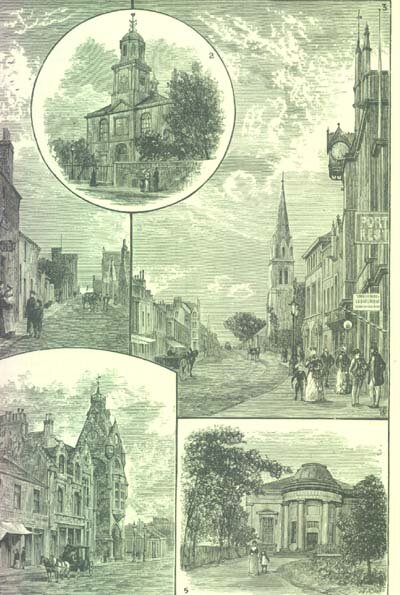
Views of Portobello c1880, top l. Ramsay Lane, centre top The Established Church, top r High Street looking east, bl Town Hall now a police station, br Episcopalian Church c1880
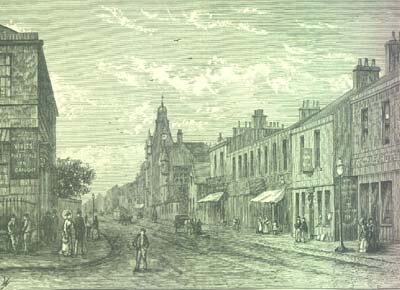
High Street, Portobello, c1880
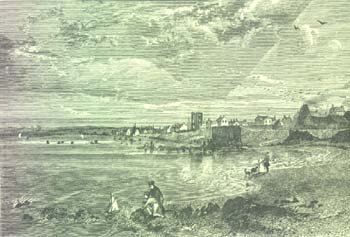
Portobello 1838 (after W.B.Scott)
St Philip’s Church, Joppa. Church of Scotland, Presbytery of Edinburgh
Saturday, October 18th, 2008

(c) John Arthur
A fire ripped through St. Philip’s in December of 1998 but it is now beautifully restored as a building and it is as vibrant as the congregation. The new stained glass windows, designed by Douglas Hogg, won a Saltire Society Art and Architecture Award for quality and originality. These windows are complemented by chancel furniture which reflect the curves of beach and shells on the nearby sea. The furniture was designed by a member of the congregation, Catherine Rennie. The worship space is bright and modern, with no pulpit and with chairs that can be moved to provide a contemporary worship space. for more click here
Hunt for stories about historic cottage
Saturday, October 18th, 2008An appeal has been launched for any information about a derelict 243-year-old cottage in Edinburgh’s Leith Walk before it is dismantled to make way for a hotel.
Number 34b Haddington Place sits on the North Side of Leith Walk, between Annandale Street and MacDonald Road, and was built as the focal point of the 18th Century Botanic Garden which moved to its present site in Inverleith in 1823. for more click here
Ancient walls at Duddingston
Friday, October 17th, 2008
(c) John Arthur
